General Liability Insurance for California Contractors: What You Need to Know Before Stepping on a Job Site
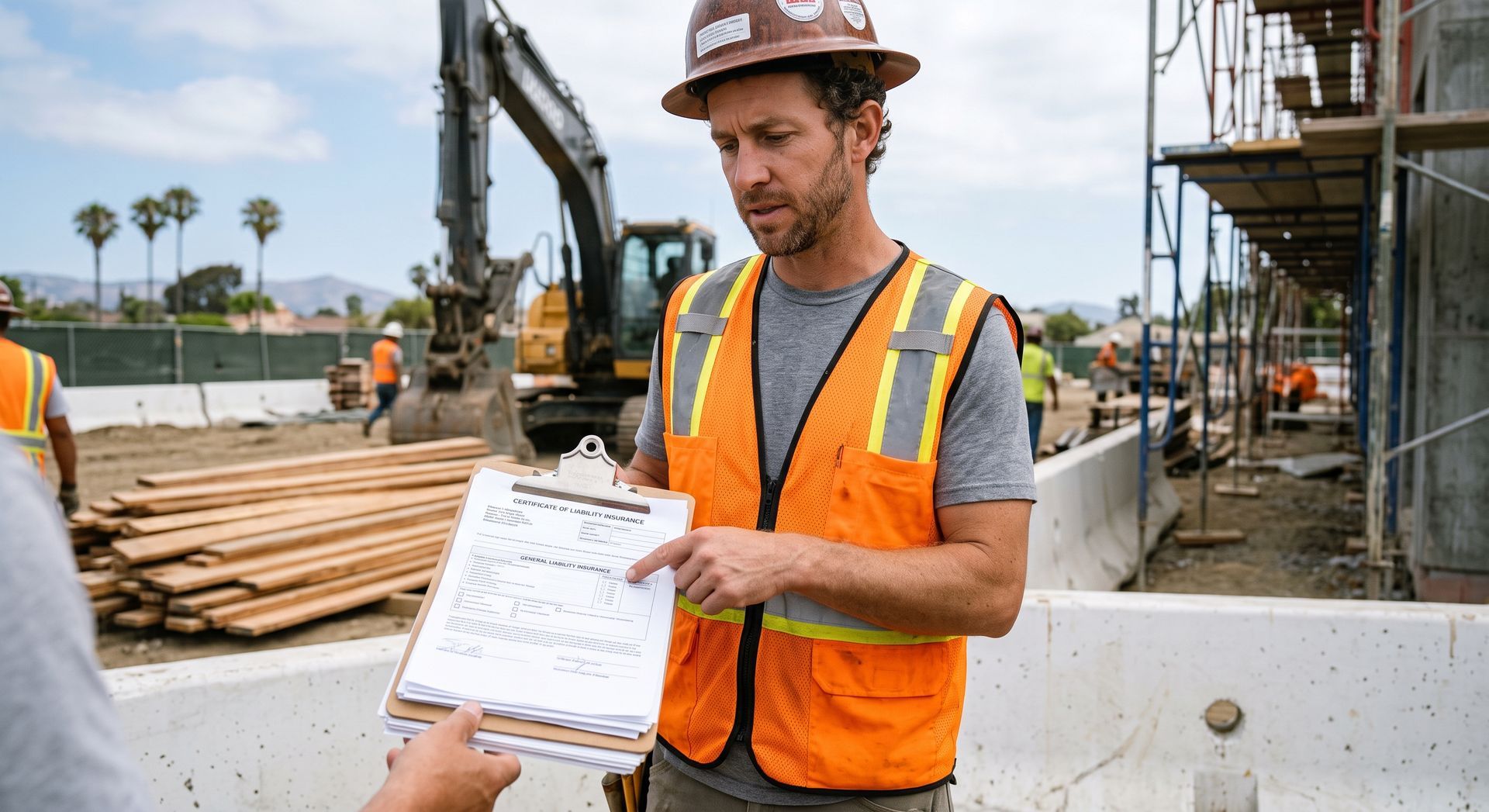
Running a contracting business in California means dealing with strict regulations, demanding project owners, and high operational risks. Before you hammer a single nail or pour any concrete, project managers and commercial clients will ask for one specific document. They want to see your Certificate of Insurance.
General liability insurance is the foundational policy for any construction business. It is not just a regulatory hurdle. It is the financial safety net that keeps your business alive if a third party gets injured, property is damaged, or a completed project fails and causes harm down the line.
Many contractors buy the cheapest policy available just to check a box. This is a massive mistake. When a serious claim occurs, bare minimum coverage often leaves critical gaps, forcing the business owner to pay out of pocket. This guide explains exactly how California contractor general liability insurance works, what it covers, and how to structure your policy to protect your livelihood.
What is Contractor General Liability Insurance?
General liability insurance protects your contracting business against financial claims involving third party bodily injury, third party property damage, and advertising injury. In the construction industry, third parties include clients, vendors, delivery drivers, and bystanders.
This policy covers the cost of legal defense, court fees, and settlements or judgments if your business is found legally liable for an incident. Given the cost of litigation in California, the legal defense provision alone makes this policy essential.
Third Party Bodily Injury
Construction sites are inherently dangerous. If a client visits your job site and trips over an extension cord, they can sue you for medical bills, lost wages, and pain and suffering. General liability covers these costs. It is important to note that this does not cover your own employees. Employee injuries fall strictly under workers compensation insurance.
Third Party Property Damage
Property damage claims are incredibly common in the trades. If your plumbing crew fails to secure a fitting and it floods a client's newly renovated kitchen, you are liable for the repairs. General liability insurance steps in to cover the cost of replacing the damaged property.
Products and Completed Operations
This is arguably the most critical component of a contractor's general liability policy. Completed operations coverage protects you after a job is finished. If you build a deck and it collapses six months later injuring a guest, the completed operations provision handles the resulting claims. California has strict statutes of limitations and repose regarding construction defects, making long term completed operations coverage absolutely vital for general contractors and specialty trades.
Personal and Advertising Injury
While less common on a physical job site, this covers claims related to libel, slander, or copyright infringement. If your marketing materials accidentally use a competitor's trademarked logo or you make a public statement that damages another company's reputation, this section provides your legal defense.
Why California Contractors Cannot Rely on Bare Minimums
California operates in a highly litigious environment. When an accident happens, lawsuits frequently name the general contractor, the subcontractor, and the property owner.
Many basic policies come with a $1 million per occurrence and $2 million aggregate limit. While this sounds like a lot of money, a severe bodily injury claim in California can easily exceed $1 million once you factor in extended medical care, lost earning capacity, and aggressive legal representation.
Furthermore, many cheap policies contain hidden exclusions. A standard policy might exclude multi-family residential projects, roofing operations, or work over a certain height. If you buy a generic policy online without consulting a specialized broker, you might find out that your specific trade is entirely excluded from coverage right when you need it most.
Understanding Additional Insured Endorsements
If you work as a subcontractor, the general contractor will almost certainly require you to name them as an "Additional Insured" on your general liability policy.
An Additional Insured endorsement extends your insurance coverage to the general contractor for liabilities arising out of your work. This means if your work causes an accident and the general contractor gets sued, your insurance policy defends them. Project owners and general contractors use this mechanism to transfer risk down the chain to the party actually performing the work.
Failing to have the correct Additional Insured language can result in a breach of contract or delayed payments. You must work with an insurance agency that understands how to quickly issue accurate Certificates of Insurance with the proper endorsements.
How General Liability Interacts with Other Policies
General liability is broad, but it does not cover everything. A robust risk management plan requires layering different policies to cover all exposures.
General Liability vs. Workers Compensation
General liability covers third parties. Workers compensation covers your employees. If a bystander is hit by falling debris, general liability pays. If your employee is hit by falling debris, workers compensation pays for their medical bills and lost wages. California law requires workers compensation if you have even one employee.
General Liability vs. Tools and Equipment Coverage
If you drop a hammer and break a client's custom window, general liability covers the window. If someone steals your hammer, general liability does nothing. To protect your own gear, you need Contractors Tools and Equipment Insurance.
General Liability vs. Commercial Auto
General liability typically excludes incidents involving vehicles. If you rear end someone while driving the company truck to a job site, you need Commercial Auto Insurance to cover the damages. We know the difference between standard commuting and commercial operations, ensuring your vehicles are properly protected on the job.
Securing Your Contracting Business
Operating without adequate general liability insurance is a gamble no California contractor should take. One minor accident or one unforeseen defect claim can wipe out years of hard work.
At RVIS Insurance Agency, we specialize in building customized insurance packages for independent contractors. Let our team review your current policies, identify missing protections, and secure the exact coverage you need to keep your business moving forward.
Call us at 408-206-8826 or visit us locally at the Berryessa Offices Building in San Jose to speak directly with an agent. Take the guesswork out of your coverage and get a customized quote tailored to your exact contracting needs today.